

The Professional Services Engine: Kantata vs. Certinia (2026)
Standard project management software is basically a toy when you run a professional services firm. Trello or Asana won’t help you when your primary assets are human capital and your survival depends entirely on utilization rates and project profitability.
You need Professional Services Automation (PSA) software. This is the financial engine that bridges the gap between project delivery, time tracking, resource scheduling, and your general ledger. If you try to manage multi-year consulting engagements on generic tools, you will completely lose visibility into your real-time profit margins.
Right now, the high-end PSA market is dominated by two massive players: Kantata (born from the merger of Mavenlink and Kimble) and Certinia (which you probably remember as FinancialForce). They are both phenomenal platforms, but they approach the software architecture from two completely different philosophies.
Here is the real-world breakdown of what you are actually buying.
Quick Look: The PSA Heavyweights
| Platform | Best For | Architecture & Ecosystem | General Ledger Philosophy | Pricing |
| Kantata (formerly Mavenlink/Kimble) | Standalone agencies & multi-vendor consultancies | “Best-of-breed” Open API | Aggregates time/expense data, pushes to any ledger | Custom Quote (Typically per user/mo) |
| Certinia (formerly FinancialForce) | Enterprises & Salesforce-native consulting firms | 100% Salesforce Native (Same UI/Database) | Native double-entry general ledger inside Salesforce | Custom Quote (Depends on modules) |
The Real-World Breakdown
The Architecture Divide (Salesforce vs. Best-of-Breed)
This is the single most important difference between the two platforms.
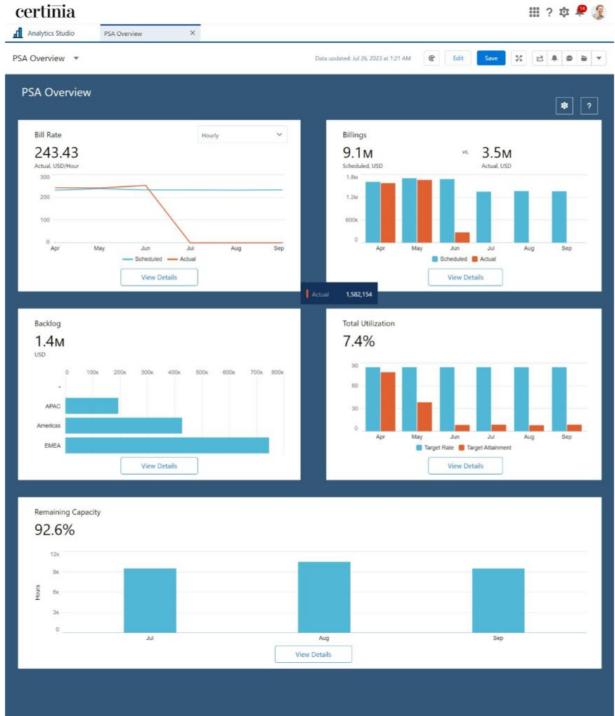
Certinia is built natively on the Salesforce platform. That is its entire identity. Every single project milestone, client time log, resource schedule, and invoicing record lives in the exact same database as your CRM. It creates an absolute, unbreakable single source of truth from the moment a lead enters the pipeline to the moment cash hits the bank. Your finance team can even generate GAAP-compliant financial statements right inside Salesforce. (Quick side note: to understand how Certinia’s cloud model contrasts with heavy on-premise systems, review our Sage Intacct vs QuickBooks Enterprise guide, as Certinia often integrates with Intacct at the ledger level).
Kantata takes the opposite approach. It follows a “best-of-breed” integration philosophy. It is a wildly powerful, specialized PSA engine that refuses to lock you into one ecosystem. It uses pre-built connectors to talk to dozens of external ledgers (Sage Intacct, NetSuite) and CRMs (Salesforce, HubSpot, Dynamics). This means you get elite PSA features without being forced to rip and replace your existing accounting software. (If you are still evaluating those standalone cloud ledgers, consult our QuickBooks Online vs Xero comparison).
Managing Resources and Forecasting Cash
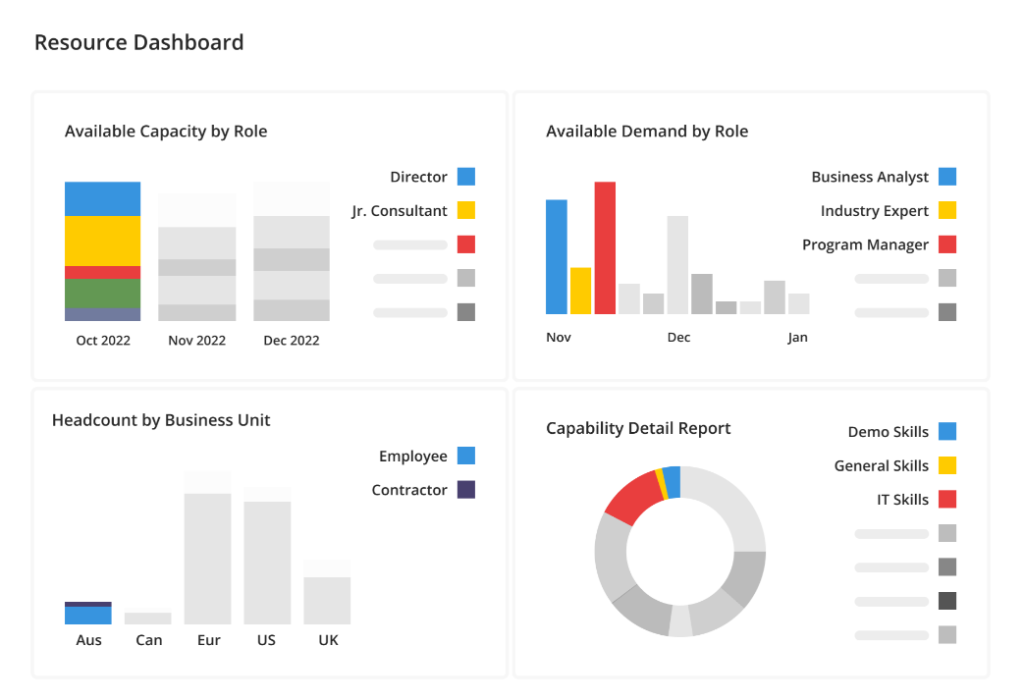
When it comes to resource intelligence, Kantata is arguably the current king of the hill. The visualization tools are insanely intuitive. A project manager can drag and drop a senior consultant off Project A, and the system instantly shows exactly how that move will impact the project timeline, your overall team capacity, and your forecasted profit margin. It’s an absolute lifesaver for preventing team burnout and staffing complex projects correctly.
Certinia punches back with its pipeline integration. Because the CRM and PSA share the exact same data, your sales team can see real-time resource availability while they are still writing the proposal. The second a deal is signed, Certinia automatically builds the project structure, applies default resource roles, and generates a detailed revenue forecast based on actual staffing rules. (By the way, if you need to track your employees’ field expenses and corporate cards directly within this PSA workflow, see our guide on Ramp vs Expensify for small business).
The “Don’t Get Burned” Checklist
Before you sign a massive PSA contract, make sure the system can actually handle these three things natively:
- True Project Profitability: It must calculate your true margin valuation by weighing the actual cost of a resource (salary + benefits burden + overhead) against what you are actually billing the client.
- Zero-Friction Time & Expense: Time entries have to flow automatically into billable invoicing. Manual data entry here causes massive revenue leakage and delayed billing. (To compare payroll engines that actually integrate this time tracking and job costing natively, see our Gusto vs QuickBooks Payroll review).
- Resource Optimization: You need a dashboard that clearly separates billable utilization from administrative dead time so you can forecast future capacity based on your sales pipeline.
The Bottom Line
Don’t let a software rep push you into the wrong ecosystem.
- Go with Kantata if: You run a standalone agency or consulting firm, and you want elite resource management without being forced to migrate your entire general ledger or CRM.
- Sign with Certinia if: Your company already lives, breathes, and operates inside Salesforce. Having your CRM, PSA, and general ledger in one absolute single source of truth is a massive operational advantage for enterprise firms.